Tinnitus
What is it?
The tinnitus or buzzing in the ears is a subjective feeling which is described by the patient in very different ways, in line with the tone of it: bells, sound of ringing, sound of sea or snail, etc. In many occasions, the patient describe tinnitus as of pulsatile sort, synchronized with heart rythm.
These could be a permanent feeling or otherwise appear before certain particular situations, in rest state, after a physical effort, before alterations of air pressure, etc.
As far as its localization is concerned, they could be referred to the ears or rather laterally or diffuse throughout the whole area of the skull.
Whichever may be its demonstration, tinnitus is a social disease affecting the regular activity of those who suffer from it, producing mood alterations, anxiety, difficult to be concentrated, insomnia, symptoms that could turn worse if they are accompanied by hypoacusis and lost of equilibrium.
There are several reasons originating these disorders, as from auditory lesions of the transmission auditory system otitis, otosclerosis up to tumoural or degenerating lesions of the auditory pathway proved by means of routine X-ray methods (CT, NMR, etc.). But, a very high rate of tinnitus is the result of neuronal biochemical alterations, which provoque irritation or lesion of the auditory pathway, showing a functional reason due to cellular metabolic alterations.
It becomes evident from our Data Banks that 49.26% of patients consult on tinnitus from functional reason, being the following background the most outstanding
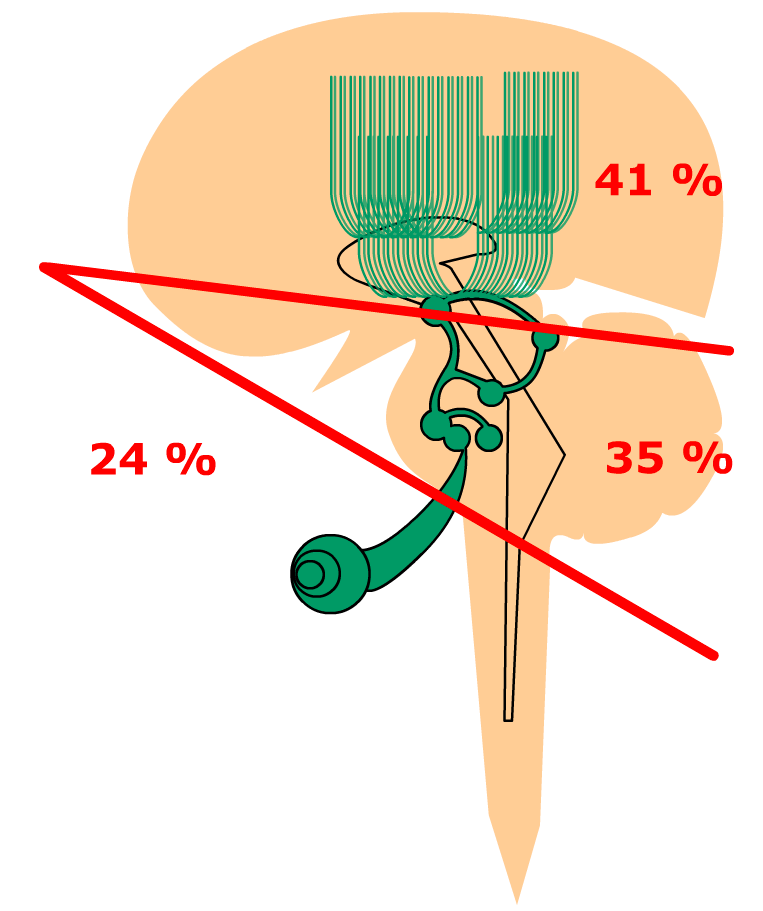
Different neurophysiological tests put into practice on patients showing tinnitus have established that 24% of tinnitus has a peripherical or ear origin, 35% derived from disorders or lesions of the brainstem, whilst 41% of the patients show a cortical location.